
susie@jxgreentape.com
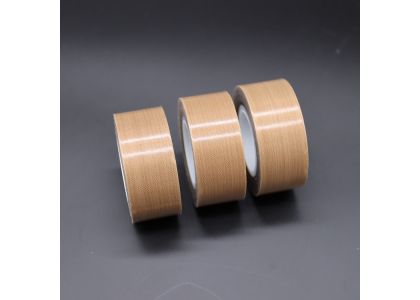
The usual complaint is simple: the sealing bar was cleaned yesterday, but today the film is sticking again. The operator raises the temperature, the maintenance team changes the tape, and procurement starts searching for “PTFE tape” without knowing which construction is actually needed.
In many cases, the answer is not a full sheet of PTFE coated fabric or a custom conveyor belt. It is a cut-to-width, adhesive-backed PTFE coated glass cloth tape that can be applied exactly where sticking, build-up, or wear happens. For international buyers and engineers, the real question is not just “What is this tape?” It is: will this tape construction work on my machine, surface, and process conditions?
PTFE coated glass cloth tape is usually made from PTFE coated fiberglass fabric, also called PTFE coated glass cloth, with a pressure-sensitive adhesive on one side. The PTFE-coated side provides the release surface. The fiberglass backing gives the tape more strength and dimensional stability than many thin film-only tapes.
In supplier catalogs, you may see similar names: PTFE coated fabric tape, PTFE glass cloth tape, PTFE fiberglass adhesive tape, PTFE fabric tape, or sometimes Teflon glass cloth tape. “Teflon” is a brand name, so PTFE glass cloth tape is the more neutral material term. In real sourcing, buyers should look past the name and check the construction: PTFE surface, glass cloth backing, adhesive type, thickness, width, liner, and intended use.
A useful shortcut is this: the PTFE surface helps with release, while the glass cloth backing helps the tape survive heat, pressure, abrasion, and repeated handling.
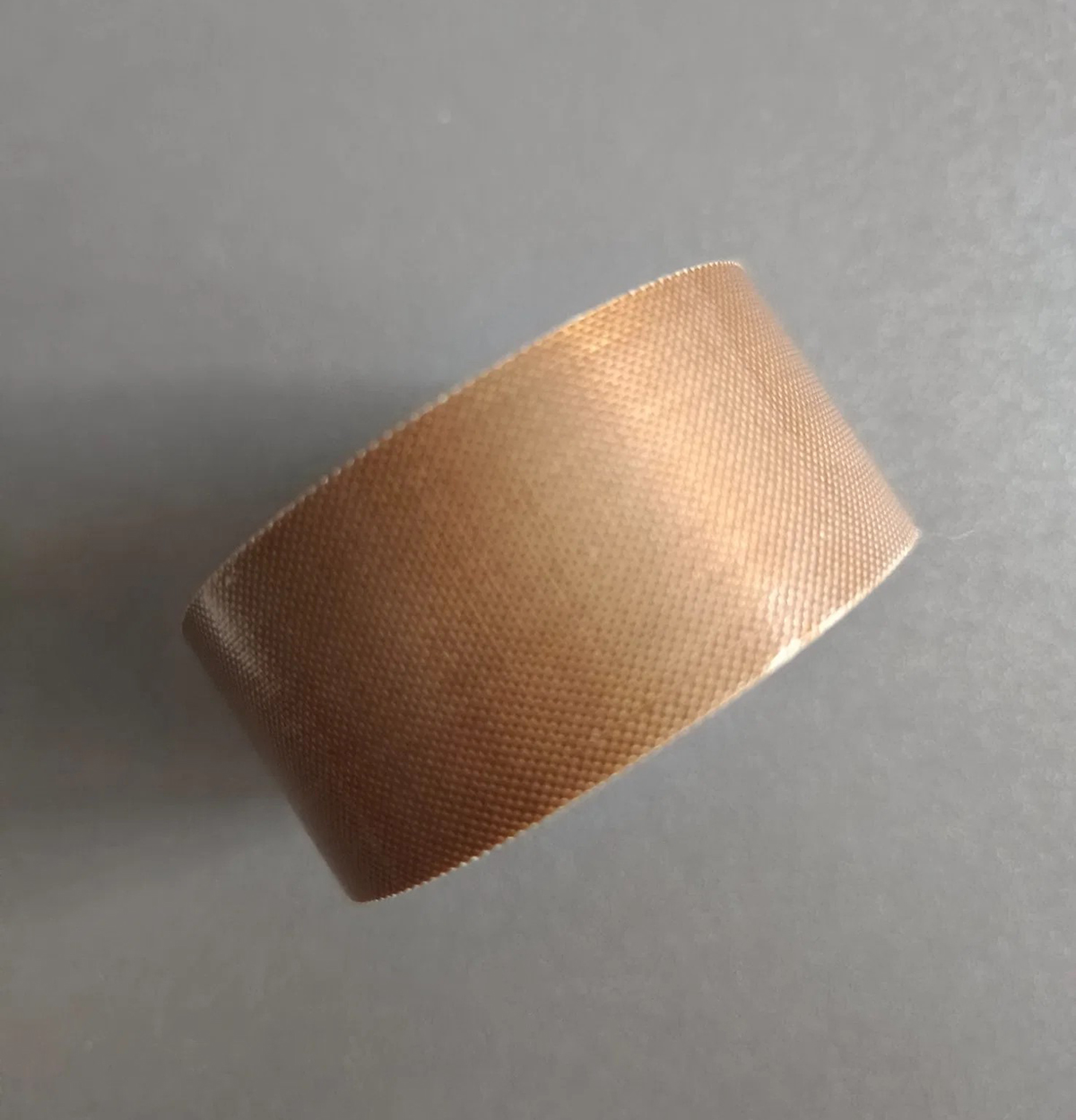
This distinction matters because many buyers search for “PTFE coated fabric” when they actually need tape.
PTFE coated fabric is the base material. It may be supplied as sheets, rolls, belts, liners, or fabricated parts. It is useful when a buyer needs a larger non-stick surface or a custom part.
PTFE coated glass cloth tape is the adhesive-backed, slit-roll version. It is made for local application: covering a sealing bar, lining a chute, wrapping a roller, protecting a mold edge, or adding a replaceable non-stick layer to a contact point.
For maintenance teams, tape is often easier to trial, cut, replace, and stock. That does not mean tape is always the best answer. But when the problem is local sticking or build-up, tape is usually a practical first step.
Heat sealing is one of the most common uses for PTFE heat sealing tape. On sealing bars, sealing jaws, impulse sealers, continuous band sealers, L-bar sealers, and vacuum sealers, the tape works as a replaceable release layer between the heated metal and the packaging film.
The goal is practical: reduce melted film build-up, protect the sealing surface, and make cleaning easier. If the tape is too thin, too narrow, poorly installed, or not matched to the film and pressure, it may fail quickly. If the adhesive is not suitable for the process, edge lifting or residue can appear before the PTFE surface itself is worn out.
A tape that works on a small impulse sealer may not last on a continuous high-duty packaging line. Machine type, sealing pressure, film type, dwell time, surface condition, and cleaning method all affect tape life. If a buyer only asks for “high temperature tape,” the supplier is forced to guess.
PTFE coated glass cloth tape can also be used as a local release or protective surface in molding, laminating, and tooling work. Typical examples include mold edge protection, resin release areas, press contact points, and localized non-stick surfaces on fixtures or tooling.
This article is only an entry guide, so it should not go too deep into mold release selection. A smooth PTFE film tape, reinforced PTFE glass cloth tape, and skived PTFE tape can behave differently depending on resin type, surface finish, pressure, and cycle conditions. For critical molded parts, buyers should test samples on the actual surface instead of relying only on a general product name.
The important point is that PTFE release tape should be selected around the process, not around a single material label.
Not every application is a heat sealer or mold. Many factories use adhesive-backed PTFE tape on smaller problem areas: chutes, rollers, guide rails, packaging line contact points, and metal surfaces where sticky products or adhesive-backed materials rub during production.
This is where the tape format has a real advantage. It can be cut to size, placed on a problem area, tested during production, and replaced if it wears out. A maintenance engineer can apply a strip, observe whether build-up is reduced, and then decide whether the tape is worth standardizing.
Still, tape is not a cure for every issue. If the root cause is excessive pressure, a sharp edge, a damaged metal surface, or an incompatible cleaning chemical, the tape may fail early. Good tape selection should go together with basic surface inspection.
These products are related, but they are not interchangeable.
PTFE glass cloth tape uses fiberglass backing and is often chosen when mechanical strength, wear resistance, and dimensional stability matter. It is a common starting point for heat sealing, roller wrapping, lining, and industrial non-stick surfaces.
PTFE film tape is usually smoother and thinner. It may be preferred when a very smooth release surface, low friction, or a thin profile matters more than reinforcement.
Skived PTFE tape is made from skived PTFE film and may be considered when the buyer needs a thicker PTFE layer, flexibility, or low-friction behavior. In heated tooling cycles, dimensional stability should be checked if alignment is critical. That is not a universal failure warning; it is a practical point to confirm through datasheet review and sample testing.
The right choice depends on surface finish, abrasion, pressure, thickness, adhesive behavior, and how the tape will be installed.
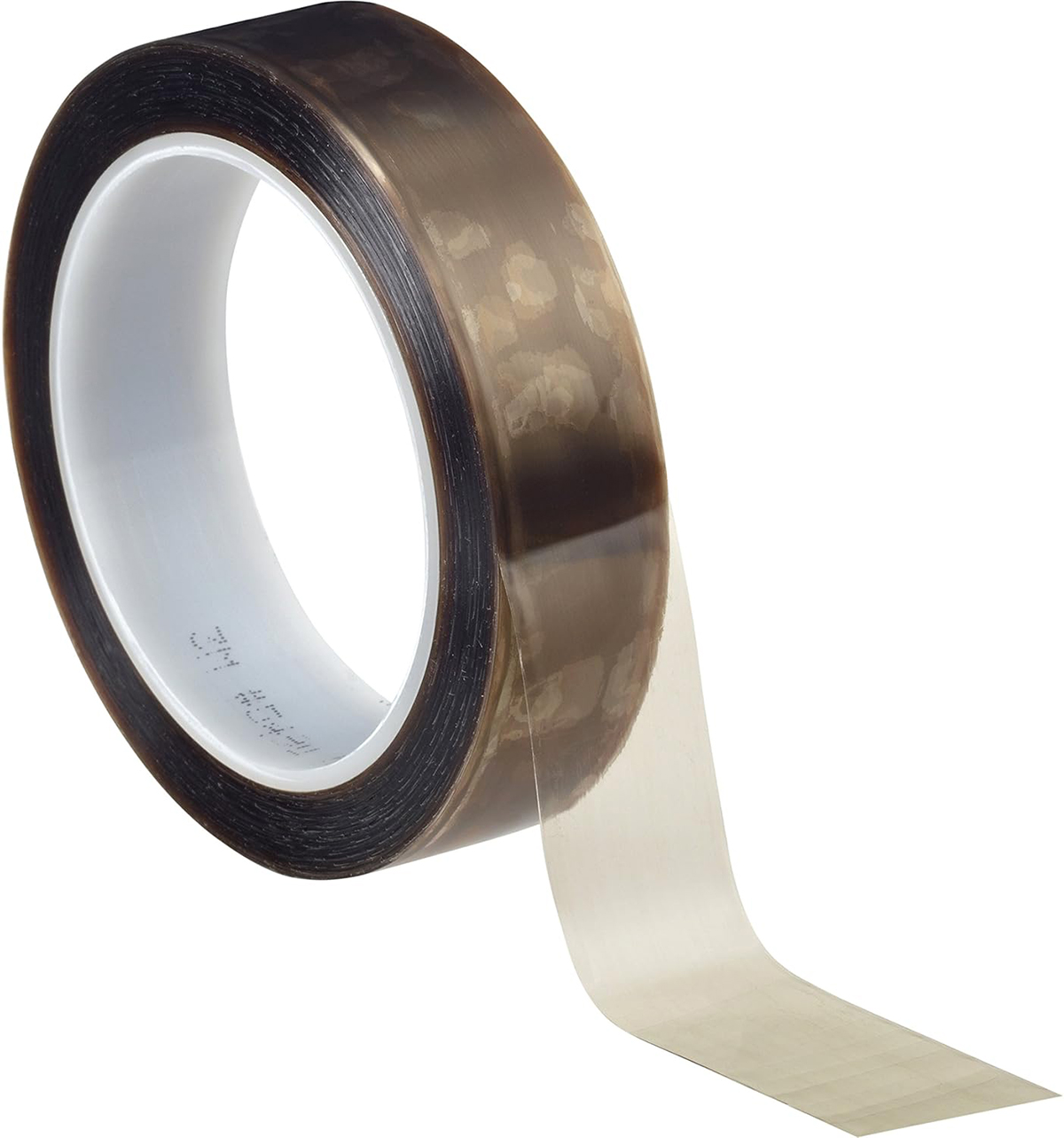
The adhesive side is not a small detail. It can decide whether the tape stays in place, removes cleanly, or leaves residue after heat exposure.
For heat sealing and high-temperature release applications, silicone adhesive is usually the starting point. It is widely used on PTFE glass cloth tapes for heat and release applications. Acrylic adhesive may be available for certain lower-temperature, bonding, or removal requirements, but it should only be considered when the finished tape datasheet supports the actual process.
Other adhesive systems may exist, but they should not be assumed suitable for heat sealing or high-temperature use. The safe approach is simple: ask for the finished tape datasheet, not only a description of the PTFE material. The rating must apply to the adhesive-backed tape as a complete construction.
A reliable supplier should also tell you when tape may not be enough.
If the application involves direct food contact, aggressive chemicals, extreme abrasion, structural load, cleanroom sensitivity, or very high heat, do not rely on general PTFE properties. Ask for product-specific data, sample testing, and relevant declarations if required.
For food packaging, especially, do not assume a tape is food-contact suitable just because it contains PTFE. The PTFE surface, adhesive system, finished construction, contact condition, and documentation all matter. If the adhesive side may be exposed, that should be discussed separately.
Also be careful with sharp edges and damaged metal surfaces. PTFE glass cloth tape is reinforced, but repeated cutting, scraping, or edge lifting can still shorten service life.
In real sourcing, buyers rarely have every parameter ready. That is normal. A good supplier can still help if the first inquiry includes the right basics.
Start with the must-have details: where the tape is used, required width and roll length, what is sticking or building up, machine type or photos, and the current failure problem. For example, “the tape lifts at the edge after two shifts” is more useful than “we need high temperature PTFE tape.”
If available, also share the machine setting, actual surface temperature, contact material, pressure, speed, dwell time, adhesive preference, and whether food-contact or documentation requirements are involved. A clear photo of the sealing bar, roller, chute, or mold edge can save several rounds of emails.
The goal is not to fill out a perfect form. The goal is to give enough process context so the supplier does not recommend the wrong tape.
PTFE coated glass cloth tape is not simply “PTFE material in roll form.” It is an adhesive-backed, field-applied solution for heat sealing protection, release surfaces, non-stick processing, and equipment maintenance. Its value comes from the balance of PTFE coating, fiberglass backing, adhesive system, thickness, and application fit.
For buyers, the smartest approach is not to ask for the highest-temperature or cheapest tape. Start with the real problem: What is sticking? Where is the tape applied? How much heat, pressure, and wear does it see? Does the adhesive side matter? Is documentation required?
Once those questions are clear, PTFE glass cloth tape becomes much easier to specify—and much less likely to disappoint on the production line.
A practical next step: send your application position, contact material, required tape width, and current failure problem before sampling. That gives your supplier a much better chance of recommending the right PTFE tape construction.
Is PTFE coated fabric tape the same as PTFE coated fabric?
No. PTFE coated fabric is the base coated glass fabric. PTFE coated glass cloth tape is the adhesive-backed, slit-roll version used for local heat sealing, release, and equipment maintenance.
Is PTFE coated glass cloth tape suitable for heat sealing machines?
Often, yes. It is commonly used on sealing bars, sealing jaws, impulse sealers, and packaging equipment to reduce sticking and build-up. The correct tape still depends on machine type, pressure, film material, temperature, and adhesive system.
What is the difference between PTFE glass cloth tape and PTFE film tape?
PTFE glass cloth tape has fiberglass backing, so it usually offers better reinforcement and wear resistance. PTFE film tape is usually smoother and thinner, which may suit low-friction or smoother release surfaces.
Can PTFE glass cloth tape be used for mold release?
It can be used as a local release surface or protective layer in some molding and tooling applications. For critical molded parts, test the tape with the actual resin, pressure, temperature, and surface finish requirements.
Is PTFE glass cloth tape automatically food grade?
No. Food-contact suitability depends on the exact PTFE surface, adhesive system, finished tape construction, contact condition, temperature, and supplier documentation.
How long does PTFE glass cloth tape last on a heat sealing bar?
There is no universal service life. It depends on machine temperature, pressure, film type, dwell time, cleaning method, surface condition, and tape construction. A sample test on the actual machine is more reliable than a general claim.