info@jxgreentape.com
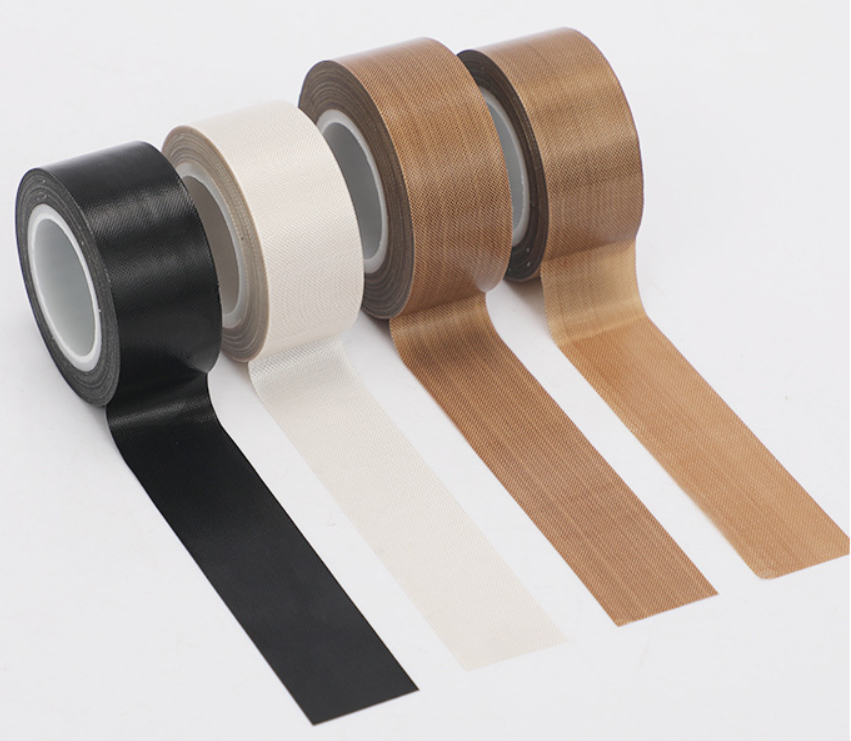
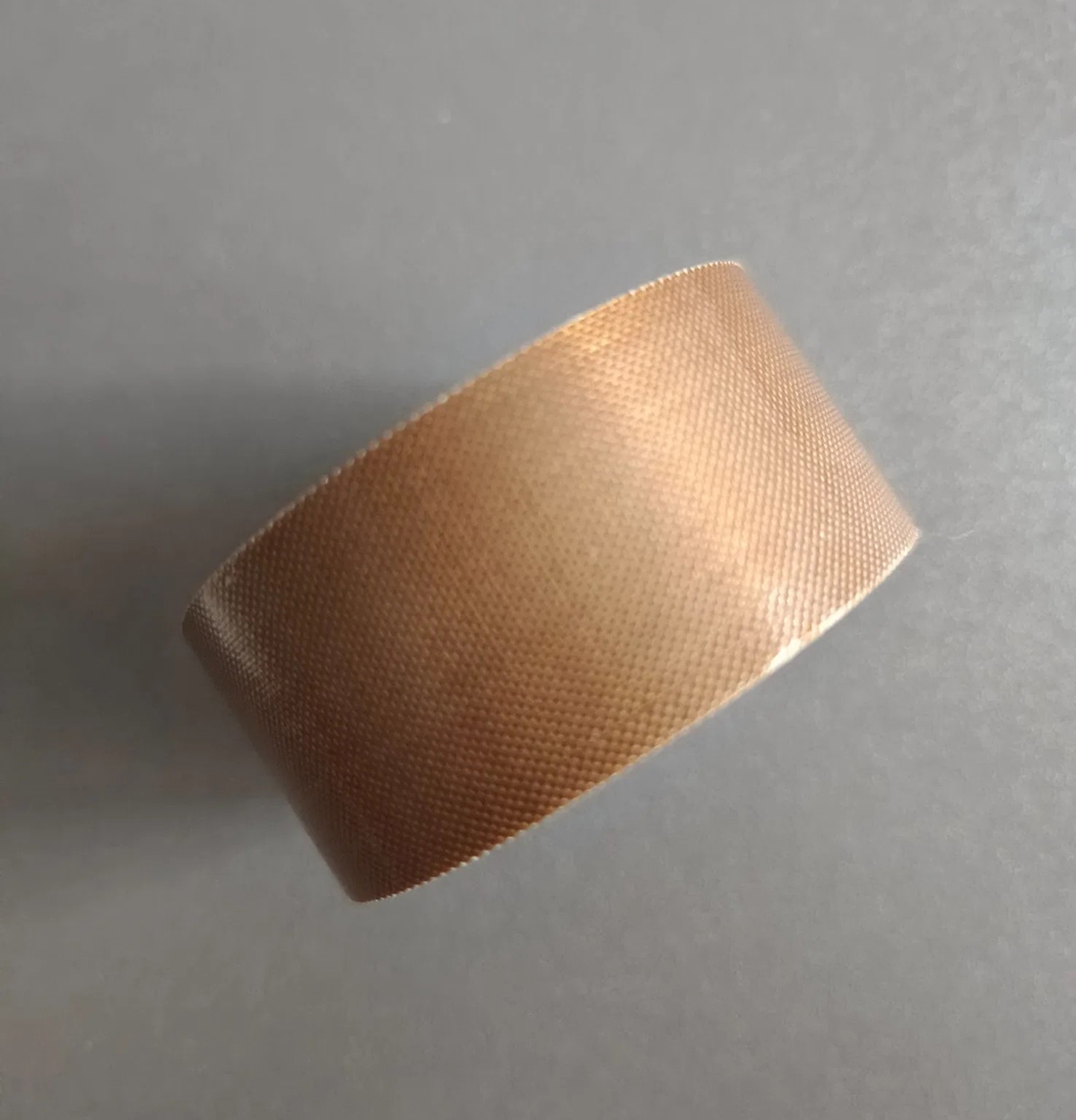
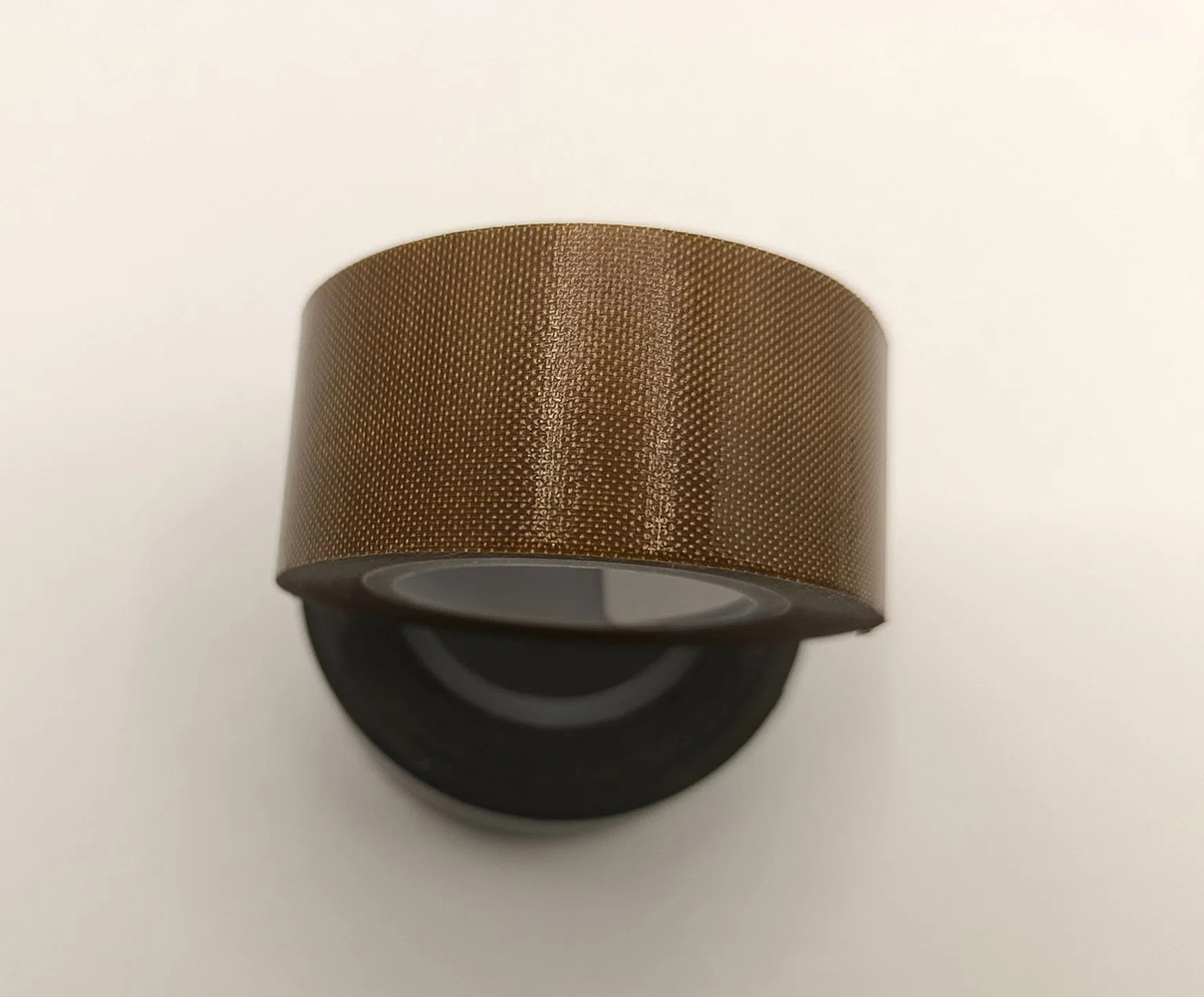
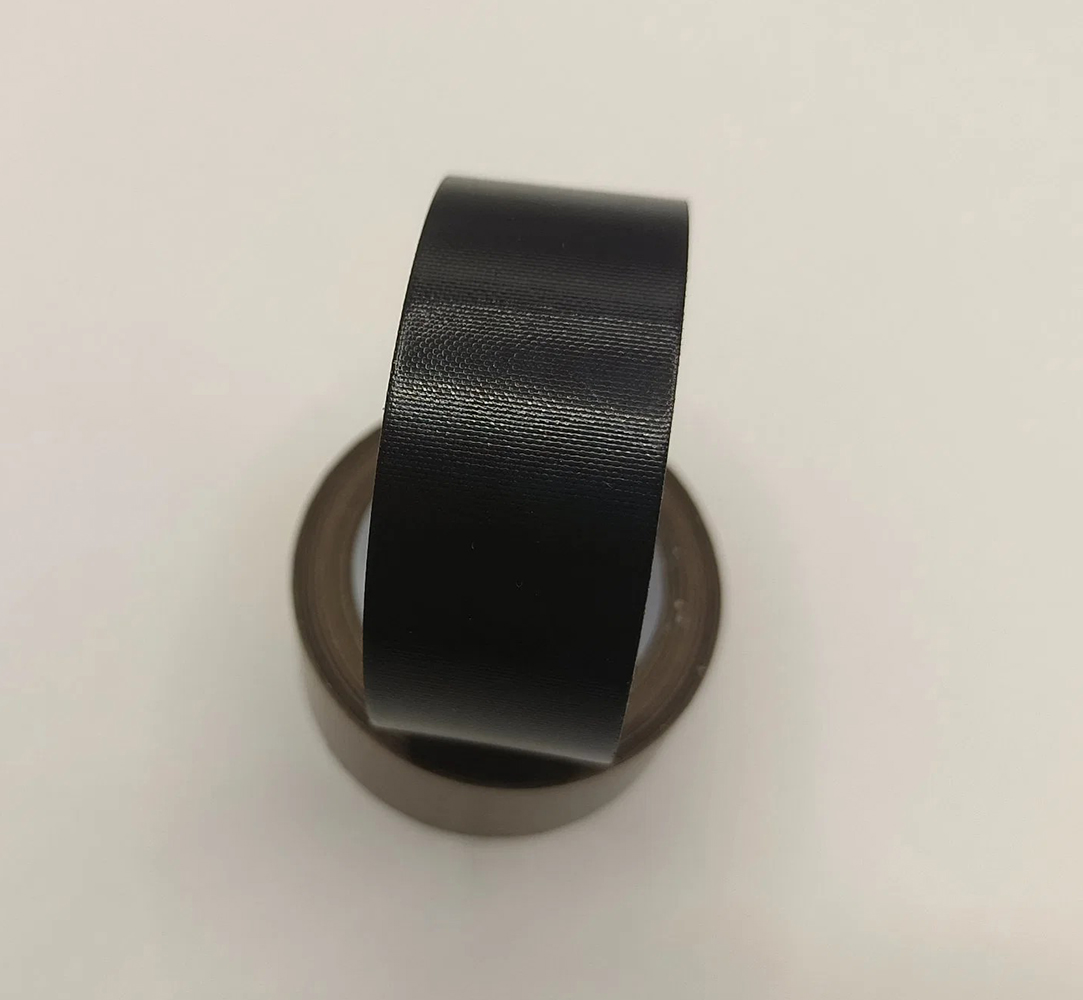
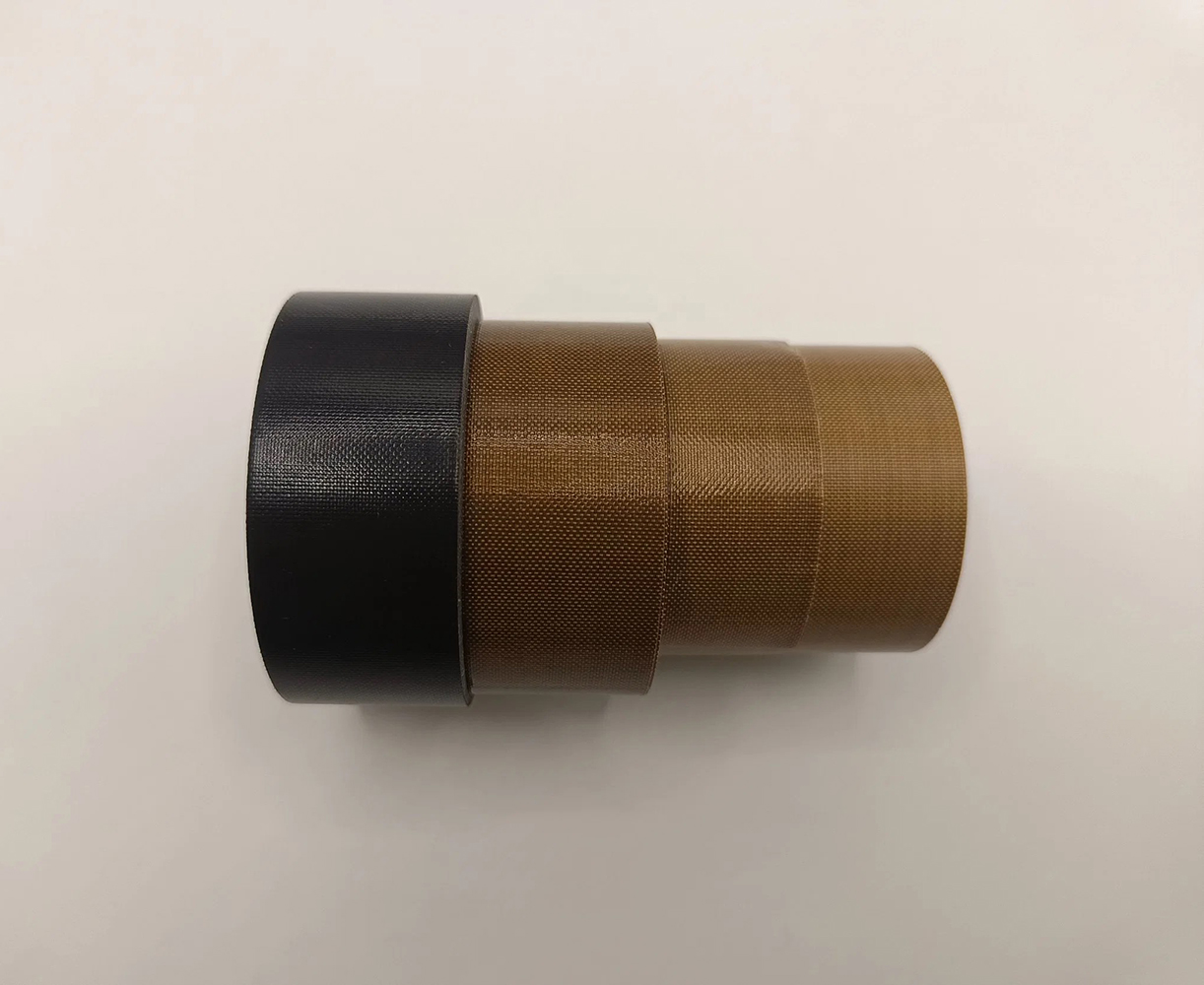
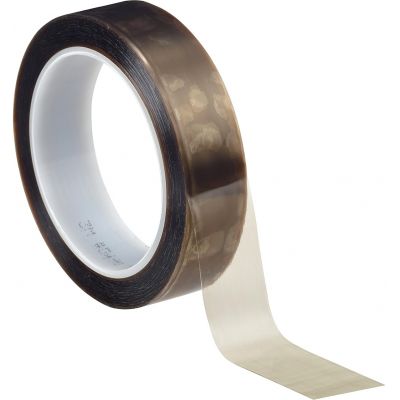
J-710 uses a PTFE-coated fiberglass cloth backing with a single-sided silicone pressure-sensitive adhesive. This PTFE fiberglass tape is used on heat-sealing bars and jaws in packaging equipment and on release surfaces where processed material tends to stick. The fiberglass-reinforced construction differs from unsupported PTFE film tape. Four thickness grades are listed in the finished-product performance table. The inquiry table below lists the application and process details we need to review a grade and roll format for you.
| Item | Description |
|---|---|
| Backing Material | PTFE Coated Fiberglass Cloth |
| Adhesive Type | Silicone PSA |
| Construction | Single-sided |
| Color | Brown/Black |
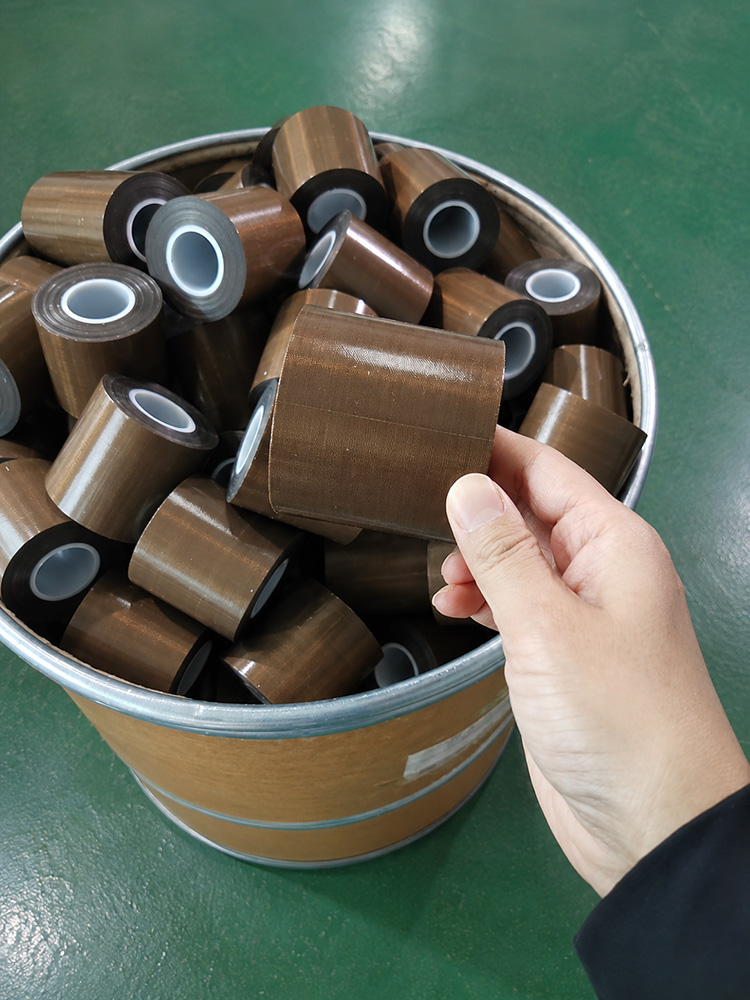
J-710 is slit to agreed widths and rewound into agreed roll formats. Include the required width and roll format with the inquiry so that the requested configuration can be reviewed.
| Property (unit) | J-710-13 | J-710-18 | J-710-25 | J-710-30 |
|---|---|---|---|---|
| Backing Thickness (mm) | 0.08 | 0.13 | 0.18 | 0.25 |
| Total Thickness (mm) | 0.13 | 0.18 | 0.25 | 0.30 |
| Adhesion to Steel (N/25 mm) | 8 | 10.5 | 12 | 15 |
| Tensile Strength (N/25 mm) | 270 | 320 | 770 | 830 |
| Elongation at Break (%) | 5 | |||
| Temperature Resistance (°C) | Up to 260 | |||
These are typical values and should not be considered specifications. The values are based on ASTM, FINAT, and other standard test methods. Final performance should be validated under the actual substrate, process temperature, dwell time, and operating conditions.
J-710 is applied to the contact face of heat-sealing bars and jaws so that the packaging film contacts the non-stick PTFE surface rather than the bare jaw. The tape sits in the heat-transfer path, so total thickness and surface condition can affect the heat and pressure reaching the seal. When describing the application, identify the equipment, the contact face, the packaging material, and the required seal appearance.
Before specifying the tape width, measure the contact-face width and decide whether the tape needs to wrap around either edge. If edge wrapping is required, include the wrap allowance on both sides in the required width and state the intended coverage in the inquiry.
As a PTFE release tape, J-710 is used on equipment surfaces where processed material tends to adhere. Whether the material releases cleanly can depend on the processed material, temperature, pressure, and contact time. When you inquire, state which material is sticking, the surface it sticks to, and the process conditions under which it happens; the inquiry table lists the details we need.
| Selection Factor | Why It Matters | What to Confirm |
|---|---|---|
| Total Thickness and Heat Path | A change in total thickness can affect the heat and pressure transferred to the seal. | Confirm the total thickness of the current tape and the actual contact conditions. |
| Edge Step and Coverage | A tape edge creates a step on the contact face, and wrapping an edge changes where that step is located. | Confirm the contact-face width, edge geometry, coverage, and whether the step falls inside the sealing area. |
| Surface Weave | A fiberglass-reinforced PTFE surface has a weave pattern that may leave a pattern on a softer film. | Confirm the acceptable appearance of the finished seal. |
| Elongation and Conformity | The fiberglass backing has low elongation, as shown in the performance table. A backing that changes little before breaking does not readily follow a small-radius curve or sharp corner. | Confirm the surface radius, corners, transitions, and intended tape path. |
| Bonding Surface | The adhesion data were measured on steel. Equipment materials, coatings, contamination, and surface condition can differ from the test surface. | Confirm the bonding-surface material, coating, cleanliness, finish, and condition. |
| Mechanical Contact | Scraping contact or a sharp edge can damage a PTFE surface. Tensile strength varies by grade, as shown in the performance table. Tensile strength is not a wear or service-life index. | Confirm the contact points, movement, sharp edges, and locations where damage has occurred. |
PTFE coated fiberglass tape such as J-710 uses a reinforced woven backing, while an unsupported film construction has no woven backing or weave pattern. Where the project requires a flatter surface without a cloth weave, evaluate PTFE Film Tape as a separate construction. Match the construction to the surface and process requirement rather than treating the two materials as interchangeable.
Use the following checks before selecting a replacement grade:
We apply the adhesive to the backing of J-710 PTFE coated glass cloth tape in-house. We also slit J-710 rolls to agreed width requirements and rewind them into agreed roll formats in-house.
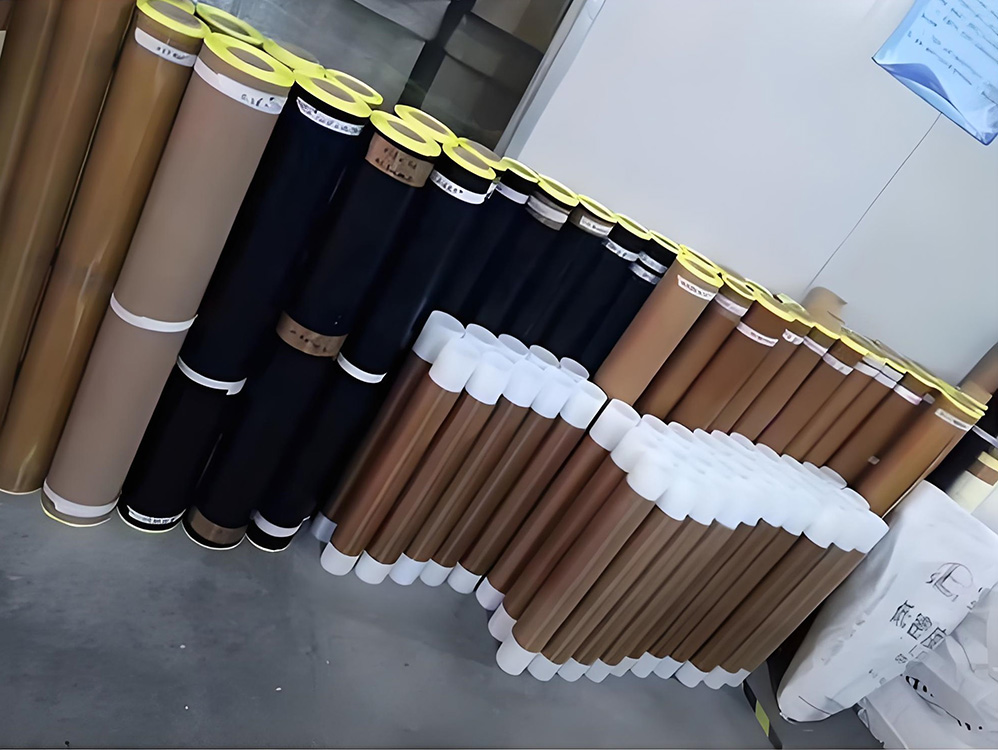
Our capabilities also include OEM slitting to agreed width requirements and logo and label printing. If you need OEM slitting or logo and label printing, state the requirement in your inquiry for order confirmation.
We maintain our own testing laboratory. Our QC department is responsible for product quality.
Total thickness is the thickness occupied by the complete tape on the contact surface, while backing thickness refers to the PTFE-coated fiberglass cloth itself. Use total thickness when comparing the space occupied by a current tape and a candidate grade. Keep backing thickness as a separate construction value.
Adhesion to steel is a typical value measured on steel. A machine surface may differ in material, coating, finish, cleanliness, or condition, so bonding to the actual surface requires a trial.
Tensile strength describes the force required to break a tape strip under tension. It is reported per 25 mm of width. It is not a measure of abrasion resistance or service life.
The performance table shows low elongation at break. Low elongation means the backing changes little in length before it breaks. Apply the tape without stretching, especially when aligning an edge or crossing a change in surface geometry. Avoid pulling the tape to force it around a shape.
The temperature-resistance entry is a typical value. It does not by itself state the exposure duration, pressure, or contacting material. Compare it with the actual contact temperature and dwell time recorded for the process. An equipment setpoint may not be the same as the temperature at the contact surface. For repeated heating conditions, both the contact and non-contact portions of the cycle need to be considered.
| Observed Condition | Factors That May Need Checking |
|---|---|
| Film sticks to the tape surface | Check visible surface contamination, damage at the contact area, actual contact temperature, dwell time, pressure, and the processed material. |
| An edge or end lifts | Check surface cleanliness, surface material or coating, edge placement, pressure during application, edge or end geometry, and contact at the lifted area. |
| Adhesive remains after removal | Check the bonding-surface material and condition, visible contamination before application, actual contact temperature, dwell time, time in service, and the removal condition. |
| The seal is uneven or shows a pattern | Check tape alignment, wrinkles, trapped air, overlaps, contact pressure, total thickness, edge-step location, and the required seal appearance. |
| The surface is worn, fiberglass is exposed, or the tape is torn | Check rubbing points, sharp edges, joint placement, contact movement and direction, debris at the contact point, and the location where the damage begins. |
Typical values are not equipment settings or acceptance limits. A short trial result does not establish long-term suitability.
Provide the available information below and mark unknown items clearly. This allows the requested construction and trial conditions to be reviewed without assuming missing details.
| Information Group | Details to Provide |
|---|---|
| Equipment and Contact | Equipment type and model; application position; contact-surface material, shape, and dimensions; material being processed. |
| Operating Conditions | Equipment setpoints; actual contact conditions; heating or contact time; cycle rate or operating speed; pressure or mechanical load; relevant environmental conditions. |
| Current Tape and Issue | Current tape construction; model or available product information; thickness; width and roll format; observed performance; failure mode or reason for replacement. |
| Purchase and Evaluation Requirements | Required width and roll format; quantity; OEM slitting requirement; logo or label requirement; intended application result and trial acceptance criteria. |
For related reading, see PTFE Release & Heat Sealing, Material Comparisons, and Failure Analysis.