
info@jxgreentape.com

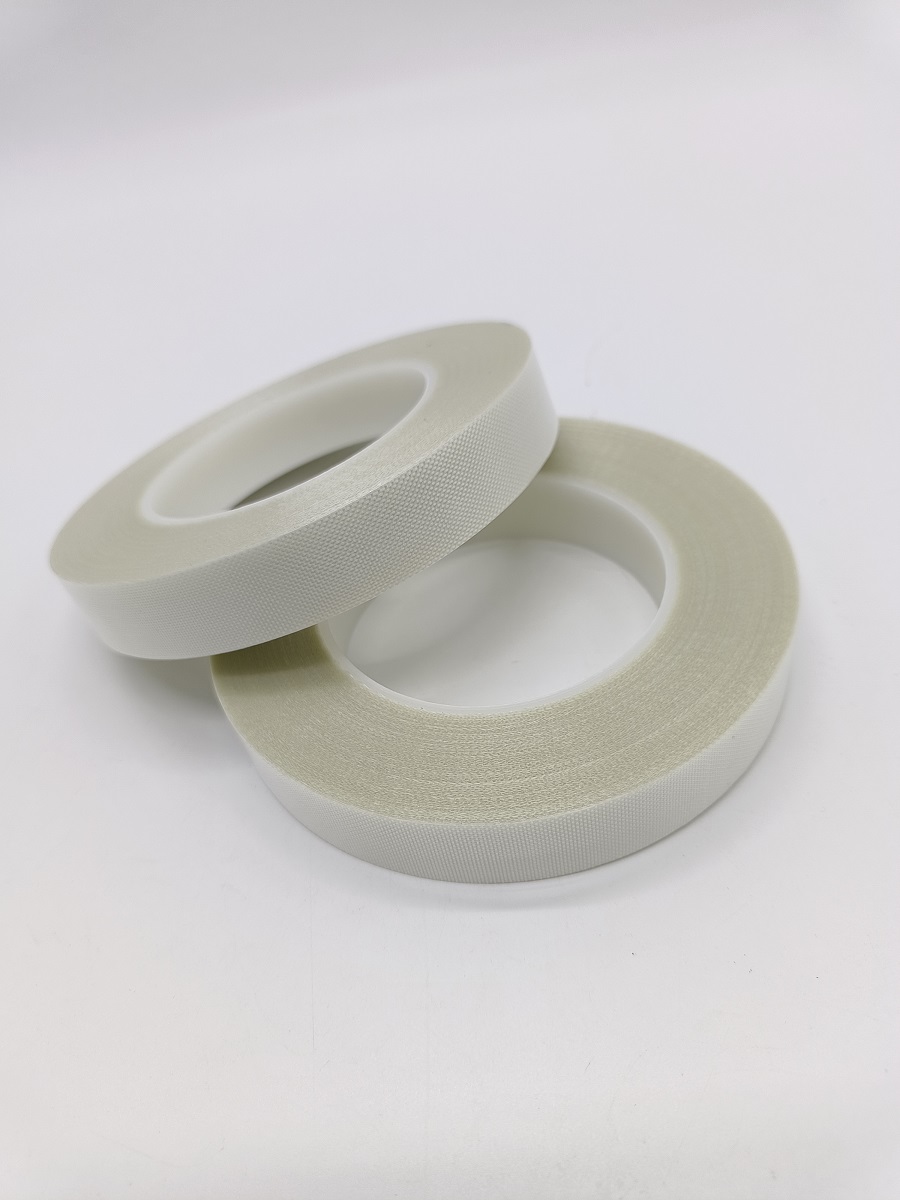
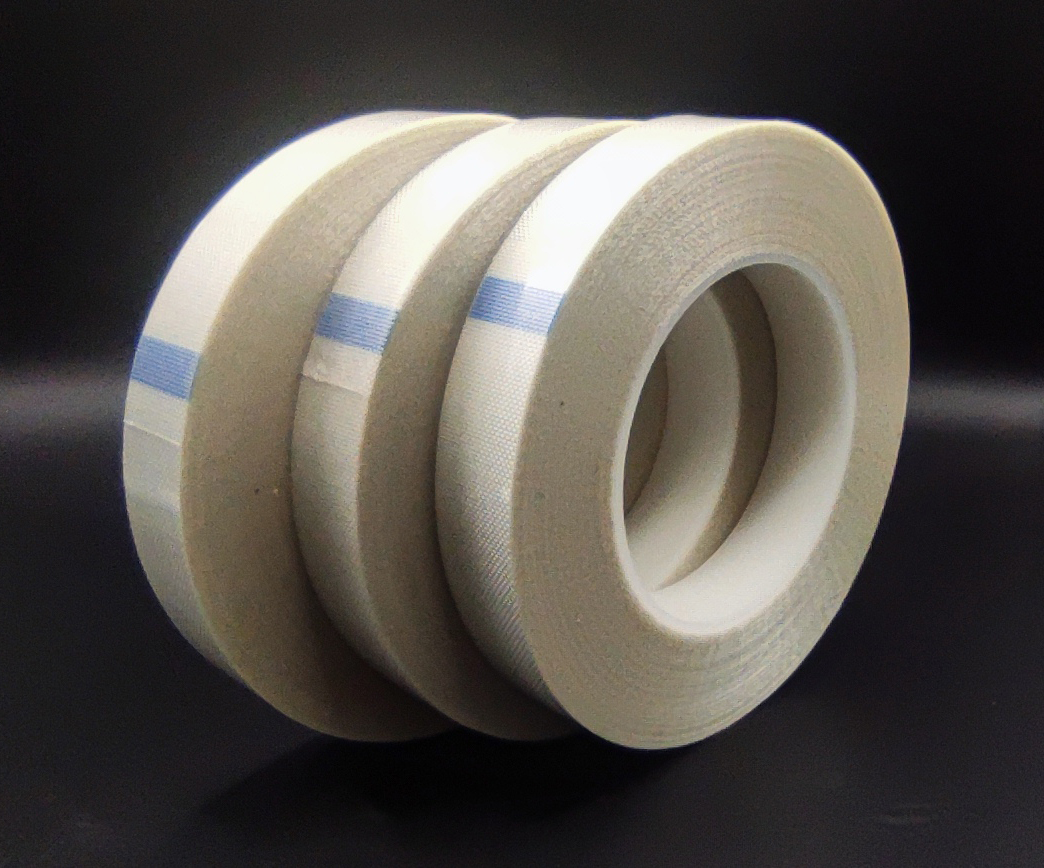
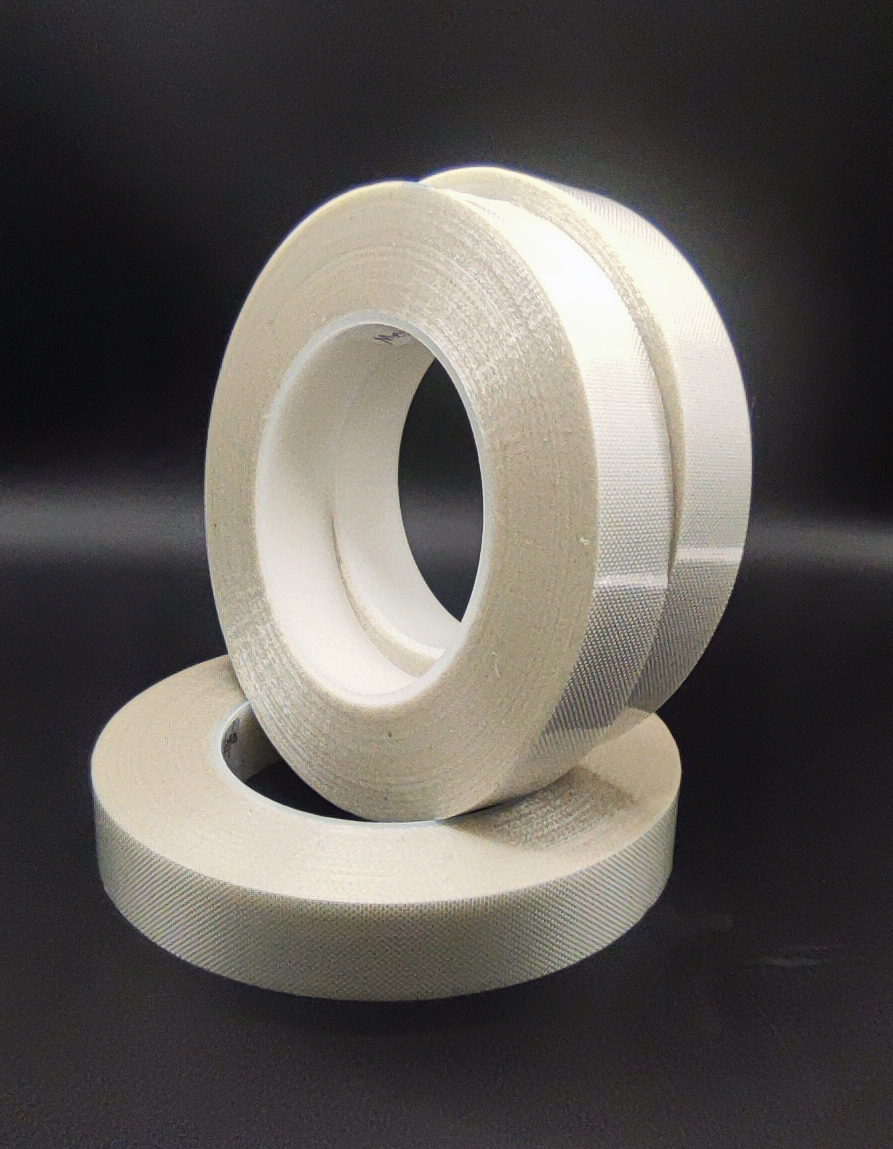
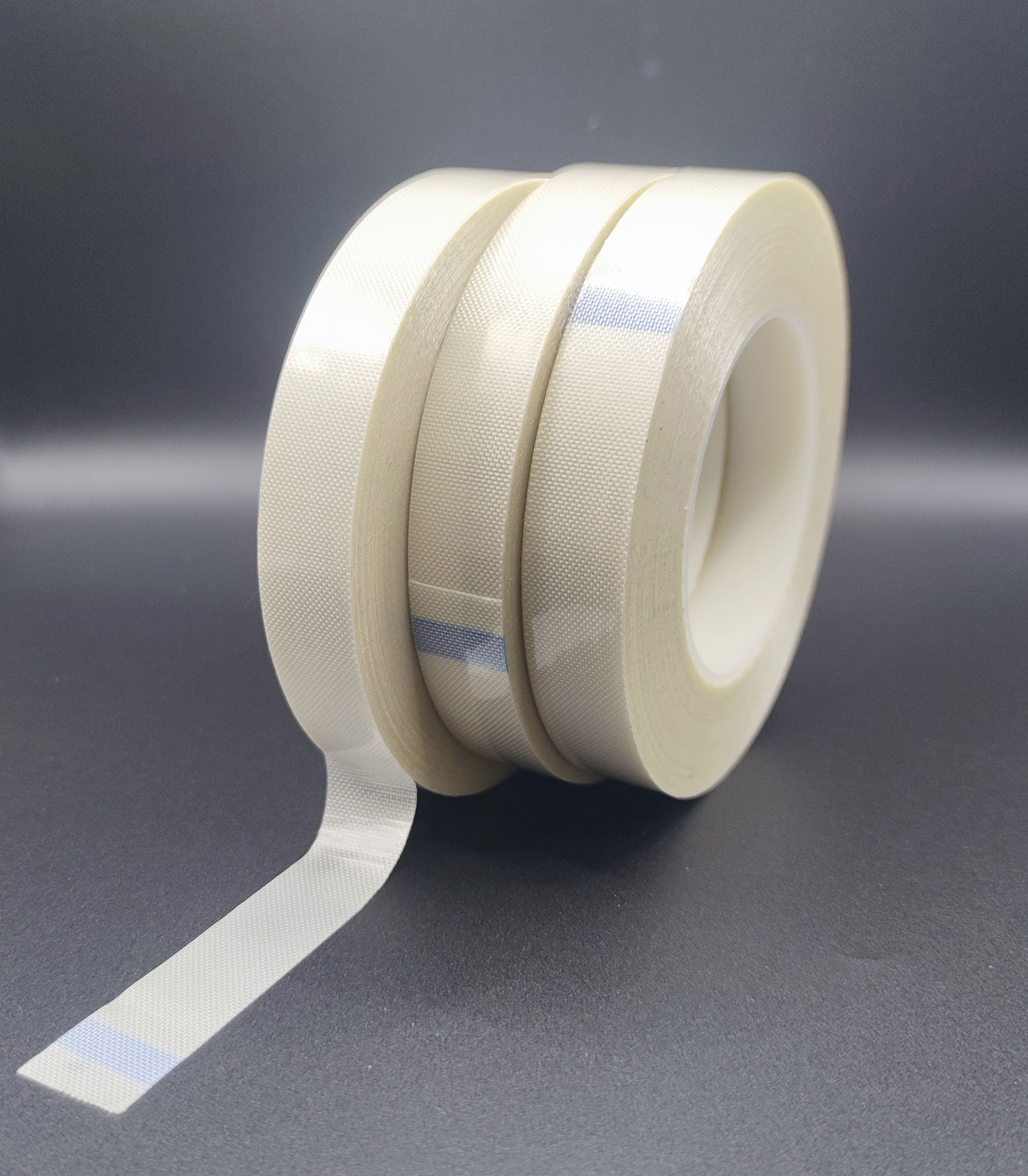
J-380 is a PET fiberglass cloth electrical tape made from polyester film laminated to woven fiberglass cloth and coated with pressure-sensitive acrylic adhesive. The composite backing combines the continuous dielectric barrier of PET film with the mechanical reinforcement and dimensional stability of woven glass cloth.
It is designed for coil wrapping, lead anchoring, insulation-layer holding, motor winding assembly and dry-type transformer insulation support. Compatibility with varnish, resin, transformer oil and a specified electrical insulation system must be verified using the exact grade and actual production conditions.
J-380 belongs to our glass cloth electrical tape range, but it differs from conventional single-layer woven glass cloth tape. Its backing is a laminated composite consisting of PET film and woven fiberglass cloth.
The PET film provides a continuous film layer for electrical insulation support, while the woven fiberglass cloth improves tensile performance, dimensional stability and resistance to mechanical deformation. The acrylic pressure-sensitive adhesive provides initial bonding to common electrical insulation surfaces, subject to substrate and process validation.
This construction is intended for applications that require both a film-based insulation layer and glass cloth reinforcement. It should not be described as filament tape or packaging strapping tape.
|
Attribute |
Specification |
|
Product Type |
PET Fiberglass Cloth Electrical Tape |
|
Grades |
J-380 / J-380A / J-380B |
|
Backing |
PET film laminated to woven fiberglass cloth |
|
Adhesive |
Pressure-sensitive acrylic adhesive |
|
Total Thickness |
0.14 / 0.15 / 0.17 mm |
|
Adhesion to Steel |
9–12 N/25 mm, depending on grade |
|
Tensile Strength |
700–1200 N/25 mm, depending on grade |
|
Elongation at Break |
5% typical |
|
Dielectric Breakdown Voltage |
5 kV typical |
|
Temperature Rating |
Up to 155°C, subject to test conditions |
|
Standard Roll Length |
50 m |
|
Available Formats |
Standard and custom-width slit rolls |
|
Main Applications |
Coil wrapping, insulation holding, lead anchoring and dry-type transformer assembly |
|
Property |
J-380 |
J-380A |
J-380B |
|
Grade Positioning |
Standard |
Economy |
Higher tensile |
|
Adhesive |
Acrylic |
Acrylic |
Acrylic |
|
Total Thickness |
0.14 mm |
0.15 mm |
0.17 mm |
|
Adhesion to Steel |
12 N/25 mm |
9.5 N/25 mm |
9 N/25 mm |
|
Tensile Strength |
1000 N/25 mm |
700 N/25 mm |
1200 N/25 mm |
|
Elongation at Break |
5% |
5% |
5% |
|
Dielectric Breakdown Voltage |
5 kV typical |
5 kV typical |
5 kV typical |
|
Temperature Rating |
Up to 155°C |
Up to 155°C |
Up to 155°C |
|
Standard Roll Length |
50 m |
50 m |
50 m |
The values shown are typical product data rather than guaranteed acceptance limits. Test methods, tolerances and grade-specific values should be confirmed in the current TDS before production approval.
The J-380 grade should be selected according to tensile load, tape thickness, adhesion requirement, wrapping geometry and production conditions. The values below are typical reference data and should be verified using the current grade-specific TDS.
J-380 provides a typical tensile strength of 1000 N/25 mm and an adhesion-to-steel value of 12 N/25 mm, the highest adhesion value in the series. It is the balanced starting grade for general coil wrapping, lead anchoring, insulation-layer holding and dry-type transformer assembly.
Adhesion should still be tested on the actual contact surface, such as PET film, insulation paper, enamelled wire or varnished components.
J-380A provides a typical tensile strength of 700 N/25 mm and can be evaluated for lighter mechanical holding requirements or applications using lower wrapping tension.
Its 0.15 mm total thickness does not mean it is mechanically stronger than J-380. Total thickness includes the complete PET film, woven fiberglass cloth and adhesive construction and should not be used as the sole indicator of tensile performance.
J-380A should only be described as an “economy grade” or “cost-effective option” when the actual product pricing and supply specification support that positioning.
J-380B provides the highest typical tensile strength in the series at 1200 N/25 mm. It can be evaluated for applications involving higher longitudinal loads, greater wrapping tension or more demanding mechanical holding requirements.
Its typical adhesion-to-steel value is 9 N/25 mm, which is lower than J-380. Higher tensile strength therefore does not mean higher adhesion or better performance on every substrate. Its 0.17 mm total thickness should also be evaluated where tight wrapping, small coil geometry or limited insulation build-up is involved.
The final grade choice should consider tape width, number of wraps, application tension, coil geometry, substrate, dielectric requirement and exposure to varnish, resin or heat. Because J-380 uses woven fiberglass cloth, the tensile test direction should be identified in the TDS, and cross-direction performance should be confirmed where the tape will experience multidirectional stress.
Typical applications include:
· Coil wrapping and winding assembly
· Lead anchoring and end-turn holding
· Positioning insulation paper or PET film
· Motor winding assembly
· Dry-type transformer insulation support
· Mechanical reinforcement of selected insulation layers
For transformer projects, review the complete power transformer insulation material selection rather than evaluating the tape as an independent insulation system.
The tape may contact magnet-wire enamel, insulation paper, PET film, copper, varnished components or resin-treated surfaces. Adhesion to steel does not predict bonding performance on all these materials. Representative production testing should include the actual surface, wrapping tension, heating cycle, varnish or resin treatment and expected service conditions.
J-380 uses PET film laminated to woven fiberglass cloth with acrylic adhesive. It is suitable when a continuous PET film layer and glass cloth reinforcement are required in the same construction.
By comparison, J-430 woven glass cloth electrical tape uses woven glass cloth without a PET film laminate and is coated with silicone adhesive. J-430 is generally the better starting option for conformable wrapping, abrasion protection and applications requiring a higher temperature profile.
The two products should not be treated as direct substitutes. Selection depends on the required dielectric barrier, temperature exposure, wrapping geometry, mechanical load and compatibility with other insulation materials.
The stated temperature rating of up to 155°C is a product reference and does not independently establish:
· UL recognition;
· approval as a complete Class F insulation system;
· compatibility with every 155°C baking process;
· suitability for every varnish, resin or transformer fluid.
Where certification or insulation-system approval is required, buyers should request supporting documentation for the exact grade.
J-380 can be supplied in standard or custom slit widths according to winding equipment, coil geometry and production requirements. Tape width, roll length, core size, winding tension and packaging format should be included in the RFQ.
Learn more about our glass cloth tape manufacturing and custom converting capabilities, or request sample rolls for testing before volume purchasing.
