
susie@jxgreentape.com
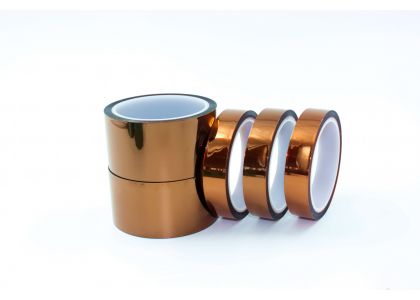
In semiconductor manufacturing, polyimide tape semiconductor applications are often discussed in terms of temperature resistance or dielectric insulation. In reality, engineers rarely select a polyimide tape based on film specification alone. Process exposure, adhesive behavior, and removal conditions typically drive the final decision.
Kapton equivalent polyimide tape is widely used across semiconductor masking, temporary protection, and electrical insulation steps. However, depending on process conditions, engineers often evaluate both silicone PSA and acrylic PSA constructions before final qualification.
In most production environments, polyimide masking tape semiconductor performance is validated inside real process windows rather than based on generic laboratory data. This is especially true for high temperature semiconductor masking where residue, particle generation, and removal stability directly affect yield and cleaning cost.
For most polyimide tape semiconductor applications, the adhesive system becomes the dominant performance variable once temperature exceeds standard electronics assembly conditions.
Kapton equivalent polyimide tape constructions can behave very differently under heat exposure depending on adhesive chemistry. During thermal cycling, adhesive viscoelastic properties shift, which can influence peel stability, residue behavior, and contamination risk.
Typical risks engineers evaluate include:
Because semiconductor masking steps operate within tight contamination control limits, these behaviors must be verified inside actual process conditions.
Silicone PSA polyimide tape is commonly evaluated in high temperature polyimide tape semiconductor masking environments where short-duration peak temperature and clean removal are critical.
Typical polyimide masking tape semiconductor scenarios using silicone adhesive include:
Silicone adhesive systems typically maintain predictable peel behavior at elevated temperature when matched correctly to process timing and removal temperature.
Acrylic PSA kapton equivalent polyimide tape is often evaluated when longer dwell thermal exposure or long-term bonding stability is required.
Typical evaluation environments include:
Depending on formulation, acrylic systems can provide stable adhesion across extended exposure windows and may offer balanced chemical stability for certain electronics process environments.

In some electronics industries, historical process experience creates default adhesive selection starting points. However, semiconductor process complexity often requires validation of both silicone and acrylic polyimide tape semiconductor options.
Key evaluation factors typically include:
Polyimide masking tape semiconductor qualification usually involves process simulation testing rather than simple datasheet comparison.
Typical validation methods include:
In semiconductor supply chains, manufacturing consistency often becomes as important as performance specification. Buyers frequently evaluate coating uniformity, film thickness control, and lot traceability.
Kapton equivalent polyimide tape suppliers supporting semiconductor applications typically provide technical documentation, traceability records, and sample support for process validation testing.
Polyimide tape semiconductor selection is primarily a process compatibility decision. Different semiconductor process steps create different thermal, chemical, and mechanical environments. Because of this, both silicone PSA and acrylic PSA polyimide masking tape semiconductor constructions remain widely used across advanced electronics manufacturing.
How do engineers choose polyimide tape semiconductor materials for different process steps?
Polyimide tape semiconductor selection is usually driven by process exposure rather than temperature rating alone. Engineers evaluate thermal peak temperature, dwell time, substrate surface energy, chemical exposure, and removal timing before qualifying a material.
In many cases, both silicone and acrylic kapton equivalent polyimide tape constructions are evaluated during process qualification.
Polyimide tape residue after reflow can vary significantly depending on substrate surface, heat profile, and pressure conditions.
For semiconductor masking polyimide tape applications, residue is typically evaluated under real or simulated process conditions rather than standard lab peel testing.
Not usually. Polyimide masking tape semiconductor performance depends not only on film temperature capability but also on adhesive behavior after thermal cycling and during removal.
Two kapton equivalent polyimide tape constructions with similar temperature ratings may perform differently in real production processes.
Semiconductor process qualification usually requires real line testing. Buyers often request kapton equivalent polyimide tape samples to validate adhesion stability, removal cleanliness, and contamination control under actual process exposure.
In semiconductor supply chains, buyers evaluate coating consistency, film thickness tolerance, slitting edge quality, and lot traceability when selecting polyimide tape semiconductor suppliers.
Failure Analysis: Why Kapton Tape Fails in Continuous Oven Lines — Root Causes & Specification Fixes